
Will AR glasses replace smartphones? It sure looks like it
[ad_1]
Alternate realities have historically dominated fact and fiction. From the use of augmented and digital realities in air beat training to sci-fi stories and novelistic tales of wanting into a crystal ball, these surrogate realities have normally helped humankind work better or cope with the severe truths of the serious entire world.
Stepping into the long run, we can see digital reality (VR) and augmented actuality (AR) technologies getting to be commonplace in our each day life. The put together market place for AR and VR headsets is envisioned to expand tenfold from 2021 through 2028, and for the future yet to arrive, AR could most likely swap that 1 gadget that our life count on so a great deal — our smartphones.

Admittedly, the long run of the internet — and how it envelops our life — will not advance in a straight line. But the astounding overuse of buzzwords (these as the metaverse) displays the escalating intrigue bordering immersive ordeals. Hunting at screens no extended will make us tick as it utilised to, and we now want to indulge in and perceive our surroundings by means of the extension of actuality. Technologies these types of as AR and VR can fulfill this wish to both increase our current reality or escape into a extra comforting one particular.
Why AR (and not VR) is the most effective smartphone substitution
Despite the fact that both of those AR and VR manipulate our vision and psyche similarly, virtual truth activities are a great deal additional immersive and deliver us into an completely new realm. This publicity can be exhilarating at to start with but can at some point develop into alienating as it disconnects us from the real globe. On top of that, due to the fact VR activities shut out our actual fact entirely, thereby perplexing our senses, they can be nauseating if used for extended periods.
Meanwhile, augmented reality bridges the disconnect between actuality and a ongoing VR practical experience. As the name indicates, augmented actuality only nutritional supplements our practical experience with the actual planet by means of supplemental facts that may well not be easily readily available. This enriches our creativeness with no withdrawing us from the reality that we exist and live in.

We can currently use our smartphones or tablets to probe our surroundings. For instance, we can level our smartphone cameras at food menus or road signals in overseas languages to translate them applying apps these as Google Lens. We can also find out about the surrounding structures and streets, or get step-by-move navigation with Google Maps or Apple Maps.
Even although VR can be equally entertaining, beneficial, or spectacular as AR, the latter seems to be a much more potential successor to our smartphones. We listing some extra good reasons supporting this argument beneath.
Usefulness of use

An AR headset is mild and easy to wield as it only provides some aspects to the serious environment in its place of obtaining to produce an solely new virtual realm. Next, the top quality of graphics from an AR headset is not particularly sure in conditions of the display’s resolution mainly because we continue to see the genuine globe in all its glory. Since the display screen on an AR headset ought to render and system less components, it can depend on much less demanding hardware (or even a smartphone) for its processing desires. Therefore, most AR headsets are available as a pair of glasses.
In reality, firms these as Oppo and Qualcomm have projected AR headsets to be extensions of smartphones. Even though that seems exact for the coming years, positioning AR headsets in our life in position of smartphones appears to be the more purely natural class of evolution — even if we’re a handful of several years off from that going on.
Familiarity
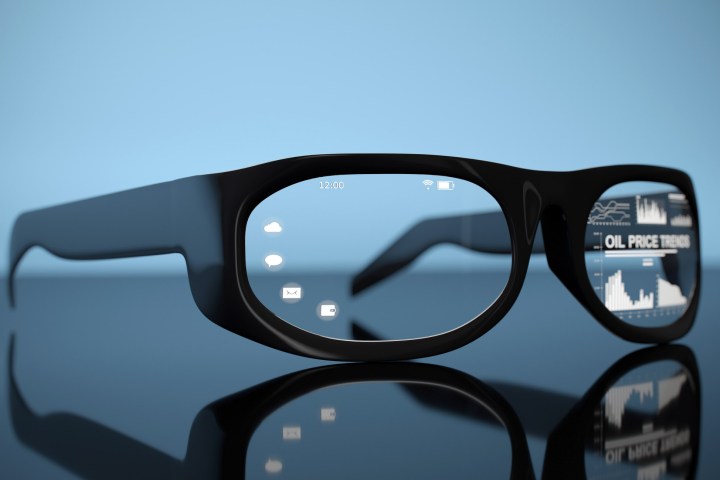
In the U.S. on your own, nearly 200 million folks put on glasses for corrected vision, as for each the Vision Council of The usa, even though global utilization stands at in excess of two billion. These studies testify that humankind has an intimate connection with eyeglasses — and has experienced that for several generations.
In common, people have a tendency to gravitate toward products that are common to them, and this familiarity with eyeglasses can probably be a substantial driving drive for the adoption of AR glasses. In comparison, VR stays fairly exclusive to lovers and industry experts who use it for gaming, going through the multiverse, or understanding. As of 2020, the number of AR users was reported to be virtually 1.5 periods that of VR, and the gap is predicted to broaden more than the coming many years.
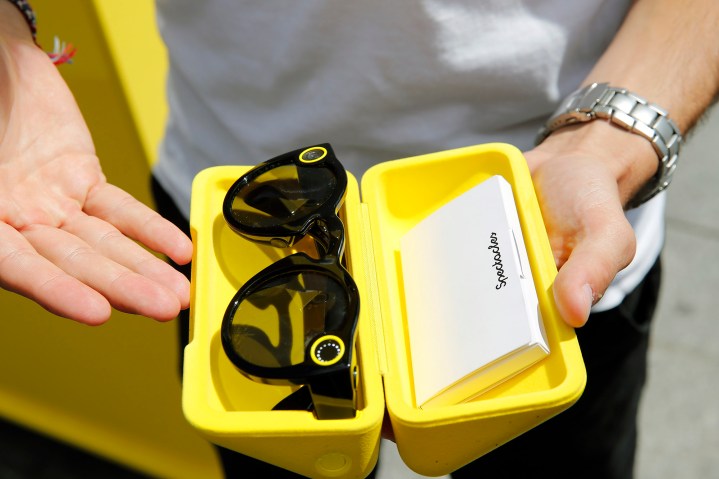
One particular of the most substantial contributors to the use of AR — even without having committed AR glasses — are filters on social media apps this kind of as Snapchat, Instagram, TikTok, and so forth. As we method a long term with deeper penetration of AR, we can be expecting our social interactions to be noticeably enriched by the use of AR.
Would not it be remarkable to hear someone’s identify in a social location just once and not neglect it simply because your AR eyeglasses try to remember it and flash it in front of your eyes devoid of the other particular person even being aware of? Which is what an evolution from smartphones to AR eyeglasses could empower.
Your everyday environment, amplified

In addition to the advancement of technologies these kinds of as AR and VR, we can count on machine mastering (ML) and artificial intelligence (A.I.) to prosper about the coming decades. Assuming A.I. does not turn out to be sentient and conquer the environment, personal computer eyesight is only envisioned to enhance in the close to potential. With this progression, the likelihood of A.I. analyzing the globe on our behalf as we glance at it by means of our AR glasses is extremely high.
As Nvidia notes, pc eyesight — also known as video intelligence — can be made use of to identify objects, faces, gestures, poses, and the standard optical movement. Coupled with cloud computing, computer eyesight can grow to be widely accessible and reasonably economical for businesses to carry out on their AR glasses.
Just envision currently being able to witness the globe like Iron Person! With AR glasses turning into portion of our life, humanity will achieve a superpower that phones may hardly ever be equipped to replicate.
Major tech’s rising fascination in AR
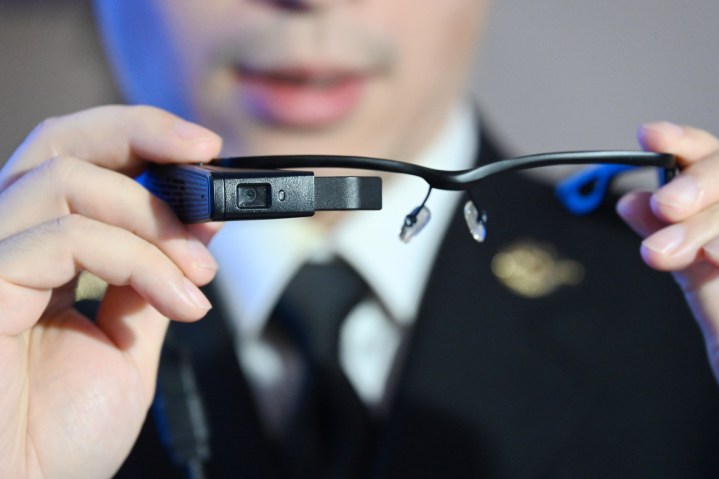
Proof suggests that almost every little thing Apple touches gets as warm as gold. The rumored AR headset by Apple is envisioned to arrive in “late 2024,” but its desire in the technological know-how can possible generate the whole smartphone business on an completely new route. As for each celebrated Apple analyst Ming Chi-Kuo, Apple even strategies to swap the Iphone with AR eyeglasses in the future ten yrs. That looks to be remarkably plausible specified the development of technologies.
Even prior to Apple, we see lesser frequent models these as Oppo demonstrating the use circumstance of AR glasses as extensions to smartphones. Just replace the smartphone with processing on the cloud, and we should have a standalone AR headset customized to tie you to a walled backyard.

At the same time, Meta’s AR eyeglasses might strike the cabinets months before Apple. Considering the company has a pretty thriving portfolio of Oculus VR headsets, its results with augmented actuality and metaverse encounters is virtually guaranteed.
And even even though the Google Glass and Microsoft HoloLens might have been early to the market place, the companies’ expertise with personal computer eyesight will empower them to present AR ordeals built-in with the most made use of operating programs in the world — Android and Home windows.
Troubles that AR glasses will not clear up

AR will probable dominate our social and personal life significantly in the foreseeable future, but difficulties linked with smartphones today could also pass across to long term systems. Men and women may well count on and encounter the same “dopamine rush” that phones are explained to offer. Zoning out or selectively blocking selected facets of actuality could be a lot more obtainable, though retreating from a convincingly objective fact may well turn out to be a lot more intricate than just pressing the power button on our smartphones.
At the exact same time, there are important difficulties in front of engineers that acquire time-analyzed AR glasses. Mapping and calibrating AR to be exact could need an intensive infrastructure of sensors and superfast wi-fi networks. The ideal way to fix this issue will be to build a pervasive device-to-equipment (M2M) mesh community in which just about every device or gadget interacts with just about every other unit. Not just that, each individual bodily item, setting up, and possibly even organic things in the globe will have to be supplemented with sensors. This way, each individual device will broadcast its data instead of the AR eyeglasses owning to detect and detect objects in their environment. That itself will be a mammoth task. Meanwhile, security and privateness concerns open up one more can of worms we do not have time to dive into.
And lastly, eradicating biases in A.I. will be just one of the major challenges that engineers will have to deal with. As opposed to human beings, computer systems do not inherently know and expertise feelings. Educating them to judge and, far more importantly, regard human values will be an arduous activity.
Editors’ Suggestions
[ad_2]
Source connection


